Tuesday, 14 June 2011
Claymation: Morph and Chas' 'Freaky Friday'!!
In this animation (me and Tilly) used a different technique, this was claymation. I thought that remaking Morph and Chas was a good idea because it has got such a good background from TV and it was also really fun to make. In this case we sort have had an advantage because in our pre-production we didn't really need to think about character designs because we was just copied this idea from TV. The frame rate we used in this production was 24 because again it looked right to be at the frame rate because if it was any lower than 24 it looked too slow and jumpy but if it was over 24 fps it looked too fast. I feel that creating the characters went really well and they looked really affective but the problem we had with them was that when we moved them we had restrictions to how much we could actually move them so we had to create the animation quite quickly n rushed so the characters didn't break. Another problem we had was that in some clips you can see a reflection of my face. The overall production went ok but the animation could have been a bit better if we had more time on it. The principles of animation I have used in this animation are Exaggeration, slow in and out, staging, anticipation and squash and stretch.

Cut-out Animation: A Day at the Seaside!!
For this animation our group (me, Matt Clowes and Ben Morley) created a cut-out animation (see the video on this post). We used 24 fps because we thought it woudn't look as good if it was under 24 fps becuase it would have looked slow and not as affective as we wanted it to be. The results that we got from completing the animation were in some cases good but also bed. The good part was that it looked affected and the animation was funny and had an understandable storyline. The bad part of the animation was that it looked a bit jumpy and the colours could have been used more effective. The colours of the animation was very affective but it would have been better if the characters of the animation could have been a distinctive colours to make them stand out. I feel the camera work on the production is really affective and have been used very well. If we had more time on our task to create the cut-out animation I would have spent more time making the animation to make it look more fluent and less jumpy and more time to work on the pre-production so we can fully understand what we are going to do on the final production. The principles of animation I used in this animation is staging, anticipation, exaggeration, slow in and out, timing and squash and stretch.
The Persistence of Vision and Frame Rates!!!!
What is the Persistence of Vision and How does it Work?
The Persistence of Vision is how the human eye see's moving image. This means the human eye see's a rapid succession of moving image and the images are retained in the brain. For a fraction of a second the images from before are with the images to what images the eye is seeing now.. The images will then blend and this will result into the image being the eye and mind being 'tricked' to thinking the image is moving like an optical illusion. For example, say if you had a bird on a piece of paper on one side and you had a cage on the other with string attached to both sides and you spin it at a certain speed, the bird looks like it is in the cage but it isn't. With anything that is filmed on camera the principle of Persistence of Vision will always be there because its the eye working to see the moving image. Frame rates have a big impact on the Peristence of Vision as well because if the frame rate isn't right it could look to slow and jumpy or too fast and not understandable.
What are Frame Rates and How do they work?
Frame rates are the main key to getting great quality animations as well as films and tv shows. You always need to consider the frame rate setting, because it affects how smoothly your animation plays. For example, an animation set to 12 frames per second (fps) plays 12 frames (images) each second. If the frame rate is set to 24 fps (frames per second), the animation appears to animate more smoothly than if it ran at 12 fps. However, your animation at 24 fps also plays faster than it does at 12 fps, so the total duration (in seconds) is shorter. Therefore, to make a 5‑second animation using a higher frame rate, you must add additional frames to fill those five seconds than at a lower frame rate. In animation there is a specific technique to help create more fluid movement and this is known as '2's'. It means each movement is recorded twice.
Frame rates are the main key to getting great quality animations as well as films and tv shows. You always need to consider the frame rate setting, because it affects how smoothly your animation plays. For example, an animation set to 12 frames per second (fps) plays 12 frames (images) each second. If the frame rate is set to 24 fps (frames per second), the animation appears to animate more smoothly than if it ran at 12 fps. However, your animation at 24 fps also plays faster than it does at 12 fps, so the total duration (in seconds) is shorter. Therefore, to make a 5‑second animation using a higher frame rate, you must add additional frames to fill those five seconds than at a lower frame rate. In animation there is a specific technique to help create more fluid movement and this is known as '2's'. It means each movement is recorded twice.
Tuesday, 17 May 2011
Early Pioneer: Eadweard Muybridge

Who is Eadweard Muybridge?
Eadweard Muybridge was an English Photographer and working in photographic studies of motion and motion-picture projection. Muybridge moved to America as a Young man and lived in San Francisco. Muybridge started his career as a publisher’s agent and bookseller, but developed an interest in photography that seems to been boosted when he was recovering in England in 1860 after nearly being killed in a stagecoach crash. Muybridge quickly became famous for his landscape photographs, which showed the grandeur and expansiveness of the West.

When did Eadweard Muybridge create the motion picture?
The first actual modern motion picture camera was designed by Louis Le Prince in 1888. However, Muybridge developed the process of using a series of still photographs to stimulate motion for an experiment historically known as “The horse in Motion” in 1878.
What is the Zoopraxiscope?
 The Zoopraxiscope is an early device for displaying motion pictures. People considered it as the first movie projector. The zoopraxiscope projected images from rotating glass disks in rapid succession to give the impression of motion. The stop-motion images were initially painted onto the glass, as silhouettes. A second series of discs, made in 1892-94, used outline drawings printed onto the discs photographically, then coloured by hand. Some of the animated images are very complex, featuring multiple combinations of sequences of animal and human movement.
What affected the Zoopraxiscope?
The things that affected the zoopraxiscope was that you had to set the camera up and it was huge, also you had to have complete darkness and as soon as you took a picture you had to treat it well straight away.
How this information has helped me
Early Pioneers: The Lumiere Brothers

Who are The Lumiere Bros?
What are the Lumiere Bros famous for?
 The lumiere bros are well known by a lot of people for inventing the Cinematograph. The Lumieres held their first private screening of projected motion pictures in 1895. Thier first public screening of films at which admission was held on 28th December 1895, at the salon indien du Grand Cafe which is in Paris. This history-making presentation featured a short film, including their first film, sortie des Usines Lumiere a Lyon (Workers leaving the Lumier Factory).
What is Cinematography?

The Factors that affected the invention

The factors that effected the cinematograph camera was that it was very big and was very hard to carry around unlike the cameras today. The quality of the image wasn't that great either because it was only the start of the creation of fast moving image.
How this information has helped me
This information has helped me to understand The Lumiere bros and their followed on invention the cinematograph. The information that interests me the most is the first film ever made with the usage of Cinematography. I feel that it’s just unbelievable that the audience found that very short film amazing comparing to our technology today. Through my research I was able to earn about the Cinematograph and how you can create motion through this old camera. As the Lumiere Bros were inspired by the famous pioneer Eadweard Muybridge it makes me feel how the public in that time would have been feeling when these amazing inventions that have affected the world today.
Earl Pioneer: Thomas Edison

Who is Thomas Edison?
What is Thomas Edison Famous for?
What is the Kinetoscope?
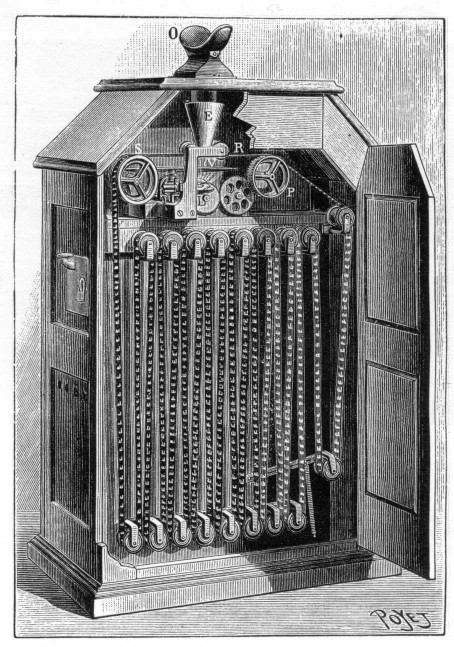
The Kinetoscope is an early motion picture device, but not a movie projector. It was designed for films to be viewed individually through the window of a cabinet containing its components. This invention was the basic introduction that would become the standard for all cinematic projection before video. Watching it creates the illusion of movement by conveying a strip of film bearing images over a light source with a high speed shutter.
Factors that affected it
The factors that affected the kinetoscope was that only one person could view the invention at a time and the moving image shown only lasted about 5-10 seconds long. Another bad thing about the kinetoscope was that it was a huge box 4 foot long and there was a small peep hole at the top for people to see and the lighting wasn't that great when you looked into it as well.
How this information has helped me
This information has helped me to understand the basic knowledge of Thomas Edison. I have found out how the Kinetoscope works and how we create the illusion of moving image. The thing that inspired me the most about Edison is that he invented the light bulb and I feel that it is one of the most important inventions to this day.
Tuesday, 10 May 2011
Early Pioneer: Charles- Emile Reynaud

Who is Charles- Emile Reynaud?
Charles- Emile Reynaud was a French science teacher and projected the first animated cartoon films. Reynaud died in a hospice on the banks of the Seine where he had been cared for since 29 March 1917.
What is Charles- Emile Reynaud Famous for?
What is the Praxinoscope?
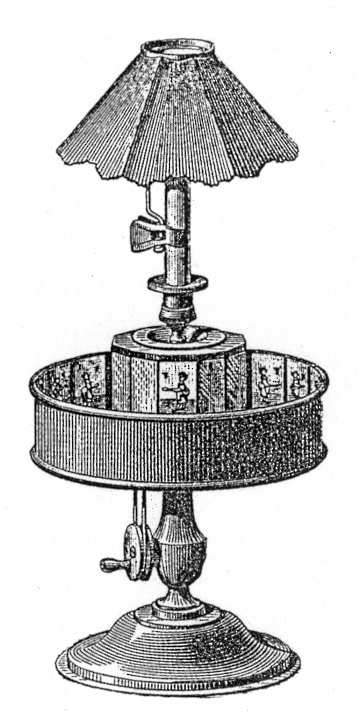 The Praxinoscope is very similar to the zoetrope (created by William Horner), it used a strip of pictures placed around the inner surface of a spinning cylinder. The Praxinoscope improved on the zoetrope by replacing its very narrow very slits with an inner circle of mirrors, placed so that the reflections of the pictures appeared more or less stationary in the positioned as the wheel was turned. A viewer would look in the mirrors and then therefore sees a rapid succession of images producing the illusion of motion, with a brighter and less distorted picture than the zoetrope.
 Factors that affected the Praxinoscope
The factors that affected the Praxinoscope is that if it was spun to fast it would look very blurry and you wouldn’t be able to see the moving image, also if you spun it backwards the sequence wouldn’t make sense.
There weren’t just bad things about the Praxinoscope because it was the successor of the zoetrope. A zoetrope could only view the moving image to one person at a time, but now the Praxinoscope can be viewed multiple times by different viewers because it has mirrors all around it and you could see it at every angle.
How the information has helped me
I feel that I have learn't a lot from this research that I have found. I now understand how the praxinoscope works and what it consists off. The factors that effected the praxinoscope was very similar to the zoetrope and I feel that I now fully understand the key terms of this.
Subscribe to:
Posts (Atom)